
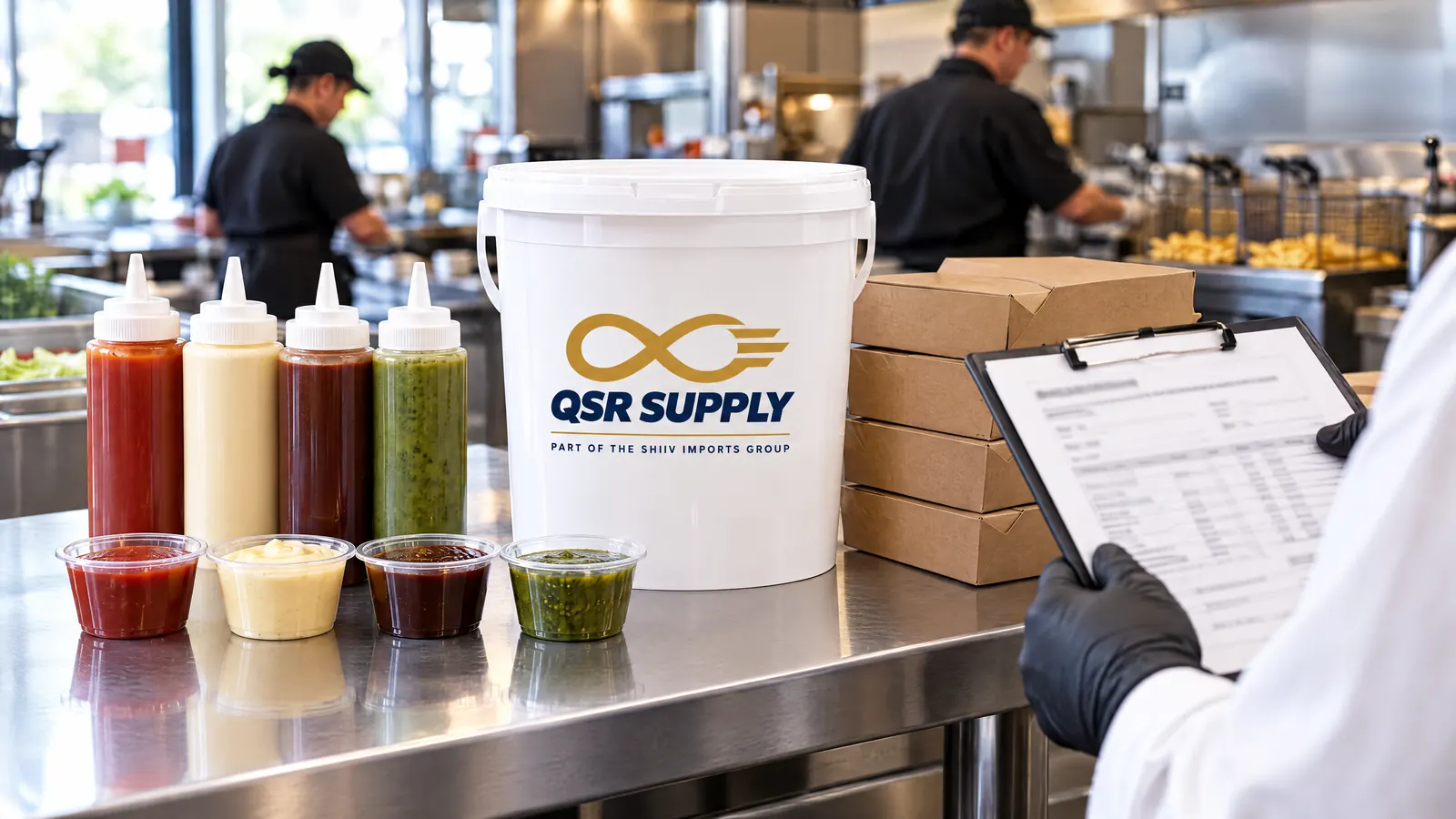
Why sauces deserve extra attention this year
Sauces and condiments are some of the most complex items on a QSR menu. One burger can carry three or four of them, and each can contain several allergens that are not obvious from the name.
The national data shows why this matters. FSANZ coordinated 92 food recalls in 2025, above the 10 year average of 87. Undeclared allergens were the leading cause, behind 35 recalls or 38% of the total. Between 2021 and 2025 there were 197 recalls for undeclared allergens, and mixed and processed foods were the most common product type. Milk, wheat and gluten, and tree nuts were the allergens most often missed.
Sauces have featured in 2026 too. In July, LGM Hot Chilli Oil was recalled in Western Australia because peanut was not declared. In August, Mr Chen's Szechuan Chilli Oil was recalled nationally because peanut was missing from the "Contains" statement. These were retail products, but the same risk applies to bulk and portion packs sold into foodservice.
FSANZ data points to three main causes: errors during packaging, accidental cross contamination, and problems with supplier verification, including ingredient changes that were not passed on. All three are things a buyer can ask about before a product reaches the store.
What the allergen labelling rules require
The Plain English Allergen Labelling (PEAL) rules in Standard 1.2.3 and Schedule 9 of the Food Standards Code started on 25 February 2024. Food packed before that date under the old rules could be sold until 25 February 2026. That grace period is now over.
The required names
Allergens must be declared using these names:
- wheat, fish, crustacean, mollusc, egg, milk, lupin, peanut, soy (or soya or soybean) and sesame
- each tree nut by name: almond, Brazil nut, cashew, hazelnut, macadamia, pecan, pistachio, pine nut and walnut
- barley, oats and rye, when they contain gluten
- sulphites, when added at 10 mg/kg or more
If wheat contains gluten, "gluten" must also appear in the summary statement.
How they must appear
On packaged food, each allergen must be shown in bold in the ingredient list, for example "maltodextrin (wheat)". There must also be a separate summary statement in bold starting with "Contains", for example "Contains: egg, milk", placed right next to the ingredient list.
For food that does not need a label, such as a burger served over the counter, allergen information must be displayed with the food or given to the customer on request, using the same required names.
"May contain" statements are voluntary and not regulated by the Food Standards Code. The Allergen Bureau publishes guidance on using them consistently.
Rules for bulk and portion packs sold to QSR
Sauces sold to restaurants, caterers and QSR kitchens are called food for catering purposes. Standard 1.2.1 requires certain information, including allergen declarations, to be provided with these products. Some details can be supplied in accompanying documentation rather than on the pack, and the buyer can ask for enough information to meet their own labelling and menu obligations. Queensland Health suggests a product information sheet as a practical way to do this.
For a QSR buyer, that means a 20 litre pail, a carton of sachets and a pack of dip cups should all lead to the same, accurate allergen information.
Where allergens hide in common QSR sauces
Recipes vary between manufacturers, so always check the specification. These are common sources to look out for.
| Sauce or condiment | Allergens often present |
|---|---|
| Mayonnaise, aioli, tartare | egg, sometimes milk |
| Soy, teriyaki and stir fry sauces | soy, often wheat and gluten |
| Satay and some chilli oils | peanut, sometimes sesame |
| Pesto | tree nuts such as pine nut or cashew, milk |
| Caesar and ranch dressings | egg, milk, sometimes fish |
| Worcestershire based and some BBQ sauces | fish, soy, wheat or barley |
| Gravy and cheese sauce | wheat, milk, sometimes soy |
| Pickles, relishes and some dried fruit condiments | sulphites |
A small recipe change, such as a new thickener, a different stock or a switch from a soy oil to a sesame oil, can add an allergen without changing the product name. That is why change notification matters as much as the first approval.
A checklist for QSR sauce buyers
- Get a full specification sheet for every sauce, dip and condiment, with allergens listed using the required names.
- Check every pack format. Bulk, sachet and dip cup versions can come from different lines or factories.
- Approve the label artwork and confirm the bold ingredient list and "Contains" statement.
- Ask how cross contact is managed at the factory and what any "may contain" statement is based on.
- Put change notification in writing. Ask suppliers to tell you before any change to ingredients, sub-suppliers or production site.
- Confirm traceability and recall readiness. FSANZ notes that manufacturers, importers and wholesalers must keep a food recall plan in line with the Food Industry Food Recall Protocol.
- Check imported product. Imported food must meet the Food Standards Code, including allergen labelling, and is subject to the Imported Food Inspection Scheme.
- Update your menu allergen matrix whenever a sauce changes. The National Allergy Council offers a free template and free "All about Allergens" training for food service staff.
Supplier changes are a risk point
Many QSR operators review their sauce suppliers to manage cost or supply. Switching is often the right move, but it is also when allergen errors are most likely, because the new product can look and taste the same while the ingredients differ. Treat any switch as a new product approval. If you are also reviewing fried items, check coatings at the same time. Some chip coatings contain wheat, as covered in our frozen chip supply guide.
Our take
Allergen management in a QSR kitchen depends on accurate information arriving with every product. With the PEAL grace period over and allergens still the top cause of recalls, the operators in the strongest position are those who treat sauces as specified products, with written specs, approved labels and a clear process for changes.
QSR Supplier works with QSR and foodservice businesses across Australia and New Zealand to source sauces, dips and condiments and other foodservice lines against an agreed specification, with the product information your team needs. If you are reviewing your sauce range, send us a chain brief or talk to our team.
Frequently asked questions
What allergens must be declared on food labels in Australia?
Wheat, fish, crustacean, mollusc, egg, milk, lupin, peanut, soy, sesame, each individual tree nut (almond, Brazil nut, cashew, hazelnut, macadamia, pecan, pistachio, pine nut, walnut), barley, oats and rye when they contain gluten, and added sulphites at 10 mg/kg or more.
Do the PEAL rules apply to sauces sold in bulk to restaurants?
Yes. Allergen declarations apply to food for catering purposes, such as bulk pails and portion packs supplied to QSR kitchens. Some other information can be provided in documentation, and buyers can ask for enough detail to meet their own obligations.
Can old allergen labels still be sold in 2026?
No. Food packaged and labelled before 25 February 2024 under the old rules could only be sold until 25 February 2026. Products now on sale should follow the PEAL format.
Do QSR restaurants have to list allergens on the menu?
Food served without a label must have allergen information displayed with the food or provided to the customer when asked, using the required allergen names. Many chains use a menu allergen matrix to do this.
What is the most common cause of food recalls in Australia?
Undeclared allergens. They accounted for 38% of the 92 recalls FSANZ coordinated in 2025, with milk, wheat and gluten, and tree nuts the most common.
Sources
- FSANZ, Allergen labelling for food businesses
- FSANZ, 2025 food recall statistics released
- FSANZ, Australian food recall statistics
- FSANZ recall alert, Chen Foods Mr Chen's Szechuan Chilli Oil 250g
- FSANZ recall alert, Auxico (Perth) LGM Hot Chilli Oil 275g
- FSANZ, Allergy information for the food service industry
- FSANZ, Labelling
- Queensland Health, Do I need a label?
- National Allergy Council, All about Allergens food service training
- Department of Agriculture, Fisheries and Forestry, Importing food
This guide summarises public regulator information current at 8 October 2026. It is general information, not legal or food safety advice. Confirm requirements with your state or territory food regulator, or MPI in New Zealand, and with your suppliers.