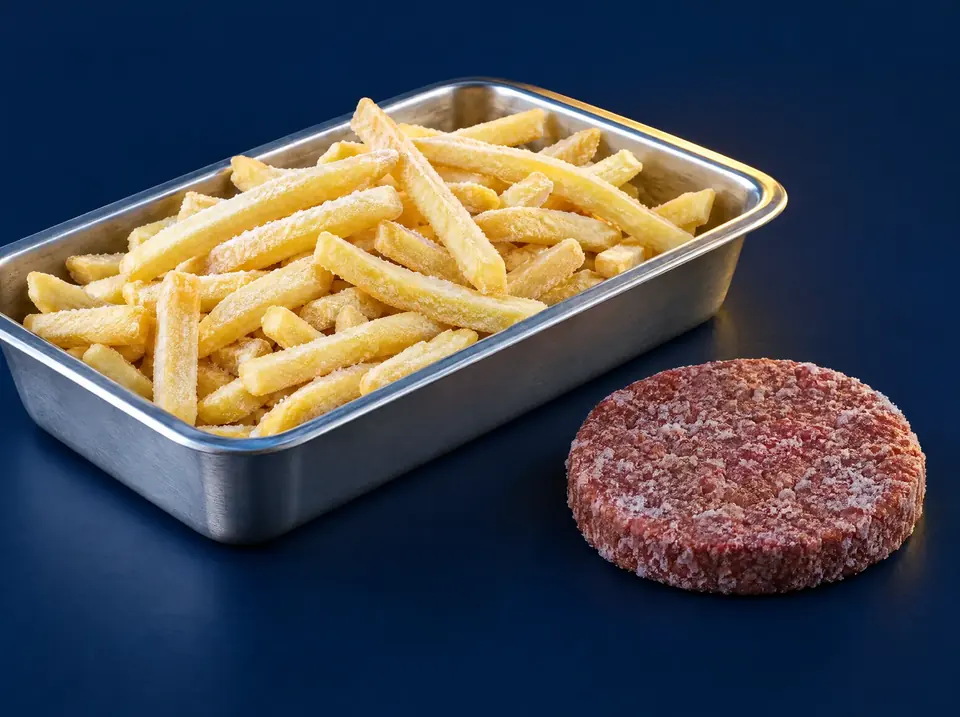
| Cut and size |
Cut size sets fry time, portion count and how the chip holds in the box. |
Straight, shoestring, crinkle or steak cut, with the size in millimetres, such as 7 mm, 10 mm or 13 mm. |
| Length profile |
Longer strips look better in the carton and change the count per serve. |
The share of strips that must be over a stated length, and the limit on short pieces and slivers. |
| Coating |
A light batter coating keeps chips crisp for longer, which helps delivery and drive-through. |
Coated or uncoated, and any seasoning on the coating. |
| Par-fry oil |
The oil used at the factory affects allergen, dietary and menu statements. |
The oil type you will accept, and any oils you will not accept. |
| Colour after frying |
Stores need the same colour at the same fry time and temperature. |
A target colour range against a chart agreed with the factory, at your fryer settings. |
| Defects |
Dark ends, sugar ends and blemishes show up on the plate. |
Limits for each defect per sample, as your quality team already measures them. |
| Pack and carton |
Bag weight and carton size have to suit freezer space and store usage. |
Bag weight, bags per carton, carton dimensions and the pallet layout. |
| Storage and shelf life |
Frozen chips stay at frozen temperatures from factory to store. |
Required storage temperature, minimum shelf life on arrival, and date coding. |
| Labelling |
Imported food is labelled to the Australia New Zealand Food Standards Code. |
Your brand or the factory's, the information panel you need on the carton, and any language rules. |