
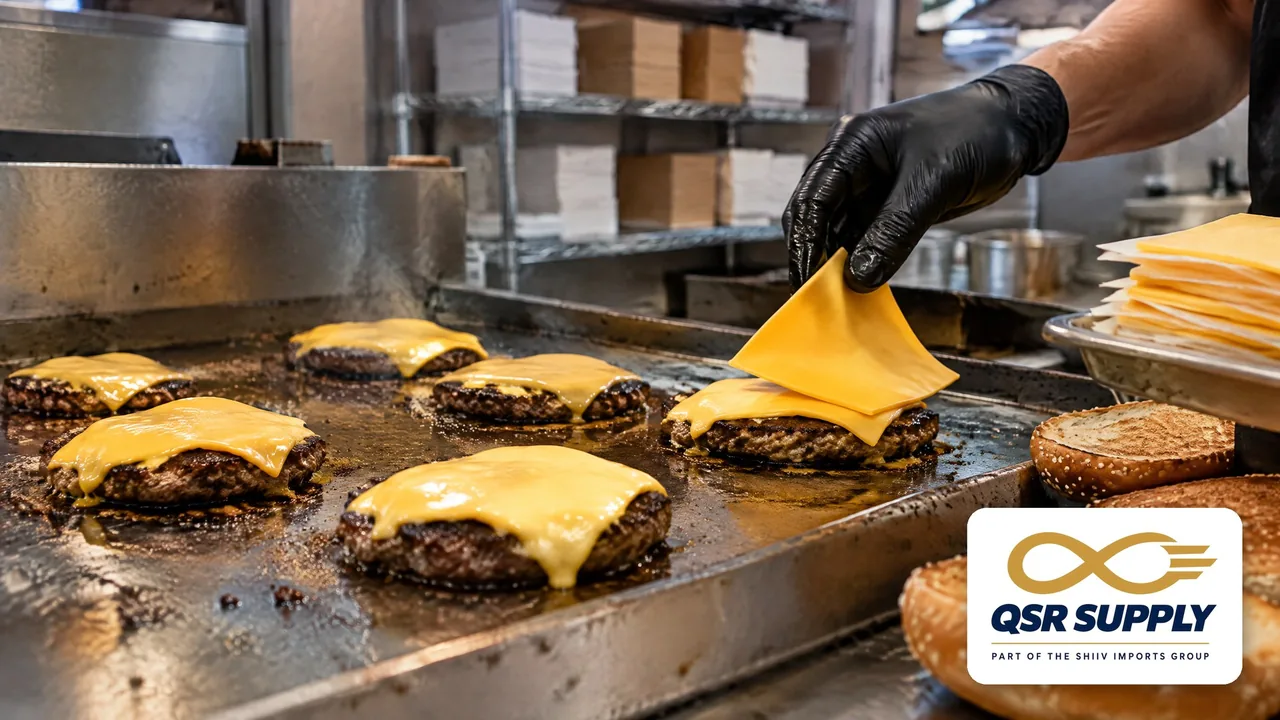
Where cheese supply is heading
More of the milk pool is going to cheese
The USDA's Canberra office, in its 8 June 2026 dairy report, estimates 2026 cheese production at 455,000 tonnes, up 1.8% from 2025. It expects cheese to use about 42% of the national milk pool and 61% of manufacturing milk, against 28% and 39% in 2015. Since 2015, national milk production has fallen by about 15% and then stabilised. Processors have put a larger share into cheese, which also limits how far cheese output can rise without more milk.
Dairy Australia's national milk production report for the 2026-27 season, drawn from processor data that can be revised, shows the first three months above a year earlier: July up 4.4% (595.6 million litres, from 570.3), August up 0.8%, and September up 1.8%. Together, July to September is up 2.2%. ABARES, in its September 2026 Agricultural Commodities Report, still forecasts the volume of milk production to fall 1% for the full 2026-27 year, because the milking herd is declining.
Imports are estimated at a record, and the mix has changed
The same USDA report estimates cheese imports at 120,000 tonnes in 2026, up 4.3% from an estimated 115,000 tonnes in 2025. If that estimate is realised, imports would pass the previous high of 116,000 tonnes in 2017. Imports in the first quarter of 2026 were 30,900 tonnes, up 7% on the first quarter of 2025.
Using Australian Bureau of Statistics data, the USDA says the United States overtook New Zealand in that quarter as the largest source of imported cheese, for the first time. The report's chart shows 38.9% of volume from the United States and 35.6% from New Zealand. Industry sources told the USDA that much of Australia's imported cheese still goes to food service, including quick-service chains and food manufacturers. For a buyer, that is more than one origin, and the landed result still depends on the exchange rate and sea freight.
Cheddar eased, mozzarella edged higher
At Global Dairy Trade Trading Event 414 on 20 October 2026, the overall index rose. Cheddar fell, for the second event in a row, and mozzarella edged higher. This guide does not quote prices.
USDA Dairy Market News, in its report for the week of 19 to 23 October 2026, said demand for whey protein products has driven higher cheese production, adding to cheddar supplies and weighing on cheddar prices. The weekly report is replaced as new weeks are published, so that sentence is tied to the report for that week.
ABARES forecasts dairy product export prices to fall in 2026-27, which it attributes to global supply and weaker growth in global demand. The same outlook forecasts the gross value of milk production to rise 2%, which it attributes to a higher farmgate milk price. Cheese, butter and milk powders do not have to move together. Contracts, the exchange rate, freight and processing sit between an auction and an invoice. Butter is covered in the butter and ghee guide.
Cheese or processed cheese
Standard 1.1.2, in the compilation of 12 September 2026, defines cheese as a ripened or unripened solid or semi-solid milk product. It is obtained by coagulating milk, or materials obtained from milk, and partially draining the whey, or by processing techniques that give a product with similar physical, chemical and sensory characteristics. Water, cultures, gelatine, starch, vinegar, salt and some other named ingredients may be added. Processed cheese is a product manufactured from cheese and products obtained from milk, heated and melted, with or without added emulsifying salts, to form an even mass.
Standard 2.5.4 says a food sold as cheese or processed cheese must be cheese or processed cheese, as appropriate. A burger slice is often made as processed cheese so that it melts into an even mass. Confirm the category on the specification, and test the melt on your own grill, oven or pizza deck. A product that replaces milk fat with vegetable oil does not meet the definition of cheese and must not be sold as cheese. Starch is on the list of ingredients that may be added to cheese, so starch on an ingredient list does not by itself take a product outside the definition.
Cheese contains milk. Treat milk as an allergen declaration and update the allergen matrix when a cheese line changes. The allergen labelling guide sets out the checks, and the same applies to cheese sauces from the sauces and condiments page.
Handling cheese in a QSR kitchen
The Australian food safety standards require potentially hazardous food to be at 5°C or colder, or 60°C or hotter, when it is received, stored, displayed or transported, unless the business can show a safe alternative. FSANZ gives dairy products such as milk, custard and dairy-based desserts as examples of potentially hazardous food. It lists hard cheeses among foods that are not potentially hazardous. Ask the supplier which category a sliced or shredded line falls into. These food safety standards do not apply in New Zealand.
Where cheese is potentially hazardous, the FSANZ 2-hour/4-hour rule uses time between 5°C and 60°C, and that time adds up, including preparation, storage, transport and display. Under 2 hours, the food can be used or put back in the refrigerator. Between 2 and 4 hours, it can be used or sold but cannot go back in the fridge. At 4 hours or more, it must be thrown out. Small, frequent top-ups of the slice drawer keep less product in that temperature band than one large tray.
A cheese specification checklist
Write cheese into the spec the same way you would a beef patty or a burger bun. Ask the supplier to confirm each point.
Product
- Cheese type and legal category: cheese, processed cheese, or not cheese
- Slice weight, thickness and size to suit the patty, and whether slices are interleaved
- Melt performance, tested on your own grill, oven or pizza deck
- Fat, moisture and salt targets, and flavour against the sample you specify
Food safety and documents
- A full ingredient list and allergen declaration. Any halal or vegetarian document you need belongs to the factory
- The factory's food-safety documents and batch traceability on every carton. Those documents belong to the factory. Shiiv Imports holds ISO 9001
- A microbiological specification, and a certificate of analysis on request
- Country of origin for each line
Supply and storage
- Shelf life unopened and once opened, and the storage temperature
- Pack format and carton size to suit the cool room
- Lead time, origin options, and an approved second source
Our take
Cheddar fell at the last two Global Dairy Trade events, and mozzarella edged higher, so compare cheese by type rather than as one line. The USDA estimates 2026 imports at 120,000 tonnes, which would be a record if that estimate is realised, and the United States overtook New Zealand as the largest source in the first quarter. Processors are putting more of the milk pool into cheese, and they have limited room to lift cheese output further without more milk. This guide does not quote prices.
QSR Supplier does not manufacture cheese, and cheese is not a listed line. Ghee and butter are on what we source and on the ghee and butter page. Shiiv sources dairy to a buyer's brief. Shiiv Imports holds ISO 9001. Factory food-safety documents belong to the factory. To put cheese on a brief, send a chain brief or talk to our team.
Frequently asked questions
Are cheese prices going down in Australia?
This guide does not quote prices. At Global Dairy Trade on 20 October 2026, cheddar fell for the second event in a row and mozzarella edged higher. ABARES, in its September 2026 outlook, forecasts dairy product export prices to fall in 2026-27, and also forecasts the gross value of milk production to rise 2% on a higher farmgate milk price. An auction move does not arrive on an Australian invoice on the same day.
What is the difference between cheese and processed cheese?
Under Standard 1.1.2, cheese is a ripened or unripened solid or semi-solid milk product made by coagulating milk, or materials obtained from milk, and partially draining the whey, or by processing techniques that give a product with similar characteristics. Processed cheese is made from cheese and products obtained from milk, heated and melted, with or without emulsifying salts, into an even mass. Standard 2.5.4 says a food sold as cheese or processed cheese must be that product.
Where does Australia's imported cheese come from?
The USDA's Canberra office, using Australian Bureau of Statistics data, says that in the first quarter of 2026 the United States overtook New Zealand as the largest source of imported cheese, at 38.9% of volume against 35.6%. Industry sources told the USDA that much of the imported cheese goes to food service, including quick-service chains and food manufacturers.
How should cheese be stored in a QSR kitchen?
The Australian food safety standards require potentially hazardous food to be received, stored, displayed and transported at 5°C or colder, or 60°C or hotter, unless a safe alternative is shown. Hard cheeses are listed among foods that are not potentially hazardous. For cheese that is potentially hazardous, use the 2-hour/4-hour rule. Under 2 hours it can be used or refrigerated, between 2 and 4 hours it can be used but not refrigerated, and at 4 hours or more it must be thrown out. Time between 5°C and 60°C adds up. These food safety standards do not apply in New Zealand.
Can I call a cheese alternative cheese on my menu?
No. Standard 2.5.4 says a food sold as cheese or processed cheese must be cheese or processed cheese, as appropriate. A product that replaces milk fat with vegetable oil does not meet the definition of cheese. Starch may be added to cheese, so starch on an ingredient list does not by itself take a product outside the definition.
What should a QSR cheese specification include?
Cheese type and legal category, slice size and weight, melt performance on your own equipment, ingredients and allergens, the factory's food-safety documents, batch traceability, shelf life, storage temperature, pack format and lead time. Shiiv Imports holds ISO 9001. Factory documents belong to the factory.
Sources
- USDA Foreign Agricultural Service, Australia dairy and products semi-annual, 8 June 2026
- Global Dairy Trade, Behind the Market, Trading Event 414
- Global Dairy Trade events calendar, Trading Event 414 on 20 October 2026
- USDA Dairy Market News, weekly report for 19 to 23 October 2026
- Dairy Australia, national milk production report, 2026-27 year to date
- ABARES, Agricultural Commodities Report, September 2026
- Australia New Zealand Food Standards Code, Standard 1.1.2, definitions
- Australia New Zealand Food Standards Code, Standard 2.5.4, cheese
- FSANZ, food safety standards, temperature control requirements
- FSANZ, 2-hour/4-hour rule
This guide summarises public government, industry and market information current at 29 October 2026. It does not quote prices. Dairy auction results move. The Australian food safety standards cited here do not apply in New Zealand. It is general information, not legal, food safety or procurement advice. Confirm requirements with your food regulator, your food safety adviser and your suppliers.